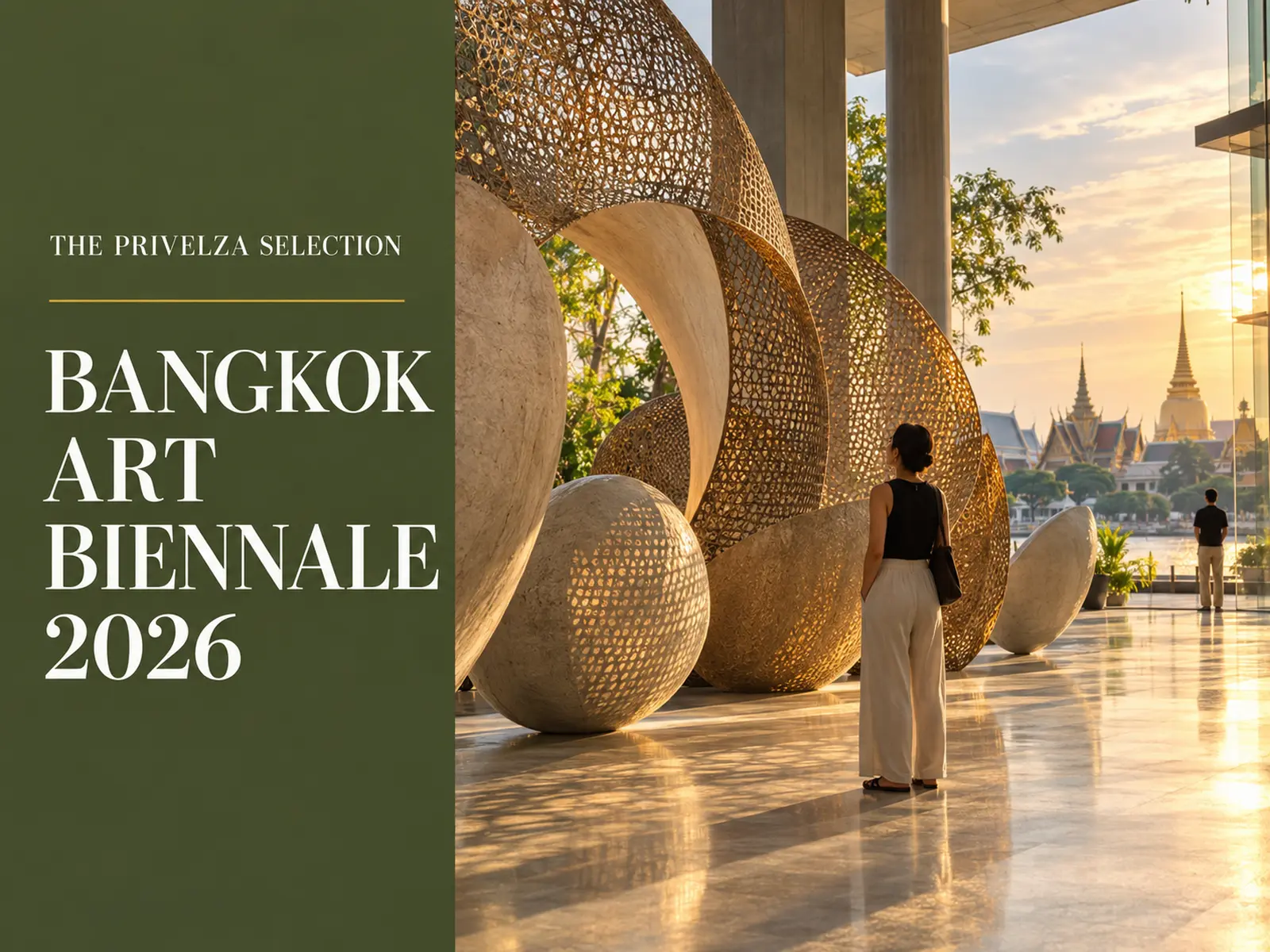
Bangkok Art Biennale returns for its fifth edition from 29 October 2026 to 28 February 2027. Under the theme Angels and Mara, 72 artists and collectives are due to appear across eleven venues ranging from historic temples and national institutions to cultural centres, shopping centres and a new mixed-use district.
That scale is the attraction, but it is also the trap. A visitor can spend more time crossing Bangkok than looking at art. The most rewarding approach is not to collect every venue. It is to decide which version of the city you want to encounter, choose one strong anchor and leave room for one or two contrasting stops.
The official Bangkok Art Biennale overview confirms the four-month run. The official venue list now identifies eleven locations, while the complete artist line-up release records 72 participating artists and collectives.
Begin with the tension, not the map
Angels and Mara is not simply a contest between good and evil. The biennale’s own theme explanation presents angels as messengers and protectors across different traditions, while Mara in Buddhist cosmology represents death, desire, fear and the inner obstacles to peace. The curatorial idea also asks what happens when apparently opposite forces coexist.
That gives the visitor a useful way into the work. Look for protection and temptation, faith and doubt, care and destruction, memory and forgetting. You do not need specialist language before you arrive. One clear question is enough to make a room, a temple courtyard or a public installation feel more connected.
The setting matters as much as the subject. Contemporary work inside a functioning temple will meet ritual, architecture and worship. The same work placed in a national museum, an arts centre or a commercial development will carry a different tension. Notice that relationship before reaching for the next pin on the map.
Choose the Bangkok you want to encounter
The eleven venues divide naturally into a few manageable areas. These are planning clusters, not fixed itineraries. Opening days, artwork access and programme times must still be confirmed through the organiser and each host venue.
The river and sacred city
Choose Museum Siam, Wat Pho and Wat Arun if you want the strongest conversation between contemporary art, heritage and living religious space. Museum Siam is the practical anchor near the old city. Wat Pho can follow on foot, while Wat Arun requires a river crossing. Wat Prayoon sits on the Thonburi side and is better treated as an optional extension than a compulsory fourth stop.
Two or three venues are enough for one day. At the temples, the biennale does not replace normal visitor rules. Wat Pho’s official visit information currently lists modest dress, daily opening and a foreign visitor fee. Wat Arun’s official visitor page also lists conservative dress, daily opening and an admission fee. Recheck both before travelling because worship, ceremonies and operational changes take priority over an art route.
Best for Readers interested in sacred architecture, the river and the way contemporary art enters a living cultural setting.
Central Bangkok and contemporary institutions
Use Bangkok Art and Culture Centre as the anchor, then add Siam Paragon or centralwOrld if the confirmed artwork placement interests you. This cluster offers the easiest public-transport day and the clearest contrast between a dedicated arts institution and commercial public space.
BACC’s current visitor information lists free admission, Tuesday to Sunday opening from 10:00 to 20:00 and direct access from BTS National Stadium. That makes it the most dependable place to begin, but do not assume every biennale work or event follows the building’s general timetable.
Best for First-time contemporary-art visitors, people who prefer an indoor route and anyone who wants to keep transport simple.
Old Bangkok institutions
Pair the National Museum Bangkok with the Art Centre at Silpakorn University when their operating days and biennale programme align. This is a quieter choice for readers interested in how contemporary art sits beside national collections, art education and the institutional story of Thai culture.
Treat the National Museum as the anchor because its permanent collection can easily expand the visit. The university art centre should be the second stop, not a rushed add-on. Confirm admission, entrances and current opening hours directly with both venues before leaving.
Best for Readers who want historical context, a slower pace and fewer commercial surroundings.
One Bangkok and Alliance Française as a focused pairing
One Bangkok and Alliance Française Bangkok can form a compact south-central pairing if the confirmed artwork placement interests you. They place contemporary art against two different settings, a newly built urban district and a long-established cultural centre.
Treat this as a focused visit rather than an automatic extension of the Siam route. Check the specific biennale spaces, programme and opening times for both venues before travelling.
Best for Visitors interested in public art, architecture and the relationship between culture and new urban development.
Use the three-stop rule
Start with one anchor venue. Add one contrasting place. Keep a third stop optional.
- Anchor The venue with the strongest programme or the most reliable operating information.
- Contrast A different type of setting, such as a temple after a museum or a public installation after BACC.
- Optional A nearby venue that you visit only if energy, weather and access still make sense.
This rule protects the experience from Bangkok’s distances. It also leaves room for a film, performance or long installation that deserves more than a quick photograph. If one work changes the direction of your day, let it.
Treat the temples as temples
Wat Arun, Wat Pho and Wat Prayoon are places of worship before they are biennale venues. Cover shoulders and knees, speak quietly, follow staff instructions and remove shoes where required. Do not block worshippers or ceremonies. Ask before photographing monks or people at prayer, and never treat a sacred object as a prop.
The most useful distinction is simple. You are not entering a neutral gallery with temple decoration around it. You are entering a religious place that has agreed to host contemporary art. Respecting that order makes the encounter more meaningful, not less accessible.
Check the live programme before you leave
The biennale’s current venue page confirms eleven locations, but the recommended-route details displayed on that page still refer to the 2024 edition. Do not copy an old timetable into a new day plan.
Before travelling, check five things.
- Is the artwork or event you want still scheduled at that venue?
- Is the biennale area open on the day and at the time you plan to arrive?
- Does the host venue charge its normal admission even when the biennale programme is free?
- Are there temple ceremonies, public events or temporary closures affecting access?
- Is the route realistic in current weather and Bangkok traffic?
The BAB events page should be the first check. Follow it with the host venue’s own website or social channel. A screenshot saved several weeks earlier is not a live schedule.
Practical information checked for this guide
- Biennale dates 29 October 2026 to 28 February 2027
- Theme Angels and Mara
- Scale 72 artists and collectives across eleven announced venues
- Announced venues Wat Arun, Wat Pho, Wat Prayoon, Museum Siam, Bangkok Art and Culture Centre, National Museum Bangkok, Art Centre at Silpakorn University, Alliance Française Bangkok, One Bangkok, Siam Paragon and centralwOrld
- Admission The biennale is promoted as free, but host venues may apply their normal admission. Check each stop separately.
- Best planning method One cluster, one anchor, one contrast and one optional stop
- Final check Official artwork placement, programme times, venue hours, fees, access and transport on the day
The Privelza view
Bangkok Art Biennale is not valuable because it gives you eleven places to tick off. Its value lies in what happens when one theme moves through several versions of Bangkok.
A temple may sharpen questions about belief and temptation. A museum may place the same questions beside national memory. A commercial district may make power, desire and aspiration impossible to ignore. The city is not just the space between artworks. It is part of the exhibition.
Choose less. Look longer. If you leave with one work, one setting and one unresolved question still in your mind, the day has done more than a completed checklist ever could.
Plan your visit through the official Bangkok Art Biennale website and explore more thoughtful Thailand experiences through Privelza’s Travel and Experiences guide. Join Privelza Circle for one considered weekly email connecting the latest Selection, Thailand Brief highlights and useful discoveries.
Research note This article was prepared before the biennale opened. Privelza has not previewed the installations or tested the suggested clusters. Core details were rechecked on 12 October 2026 and must be reconfirmed before travel.