The Phuket Vegetarian Festival is often introduced through its most dramatic images. That is understandable, but it is not the best place to begin planning a visit.
This is a living religious and community observance. Food, shrine rituals and street processions belong to the same festival, yet they create very different experiences for a visitor. You do not need to do all three to engage with it meaningfully.
The Tourism Authority of Thailand’s 2026 event listing gives the main festival dates as 10–18 October 2026. Its Thai-language listing also places the Go Teng pole-raising ceremony on 9 October and the farewell ceremony on the final night. Those dates establish the broad window. Your next decision is what kind of encounter you actually want.
Begin with the meaning, not the spectacle
In Phuket, the observance is commonly known locally as Jia Chai. Thailand’s Public Relations Department describes it as a period of spiritual purification and community faith, not simply a temporary change of diet.
The widely told local origin story connects the observance with nineteenth-century Chinese migrants, tin-mining communities and an opera troupe affected by illness. The Thailand Foundation’s cultural overview presents this as a legend carried through the community. It is better understood as inherited cultural memory than as a medically proven historical account.
That distinction matters. A procession is not staged for a visitor’s entertainment, and a shrine is not a themed attraction. The visible rituals belong to beliefs about purification, protection, devotion and the welfare of the community.
As a visitor, the most useful question is not “How much can I see?” It is “How closely do I want to enter this environment, and can I do that respectfully?”
Option one: start with a food-led introduction
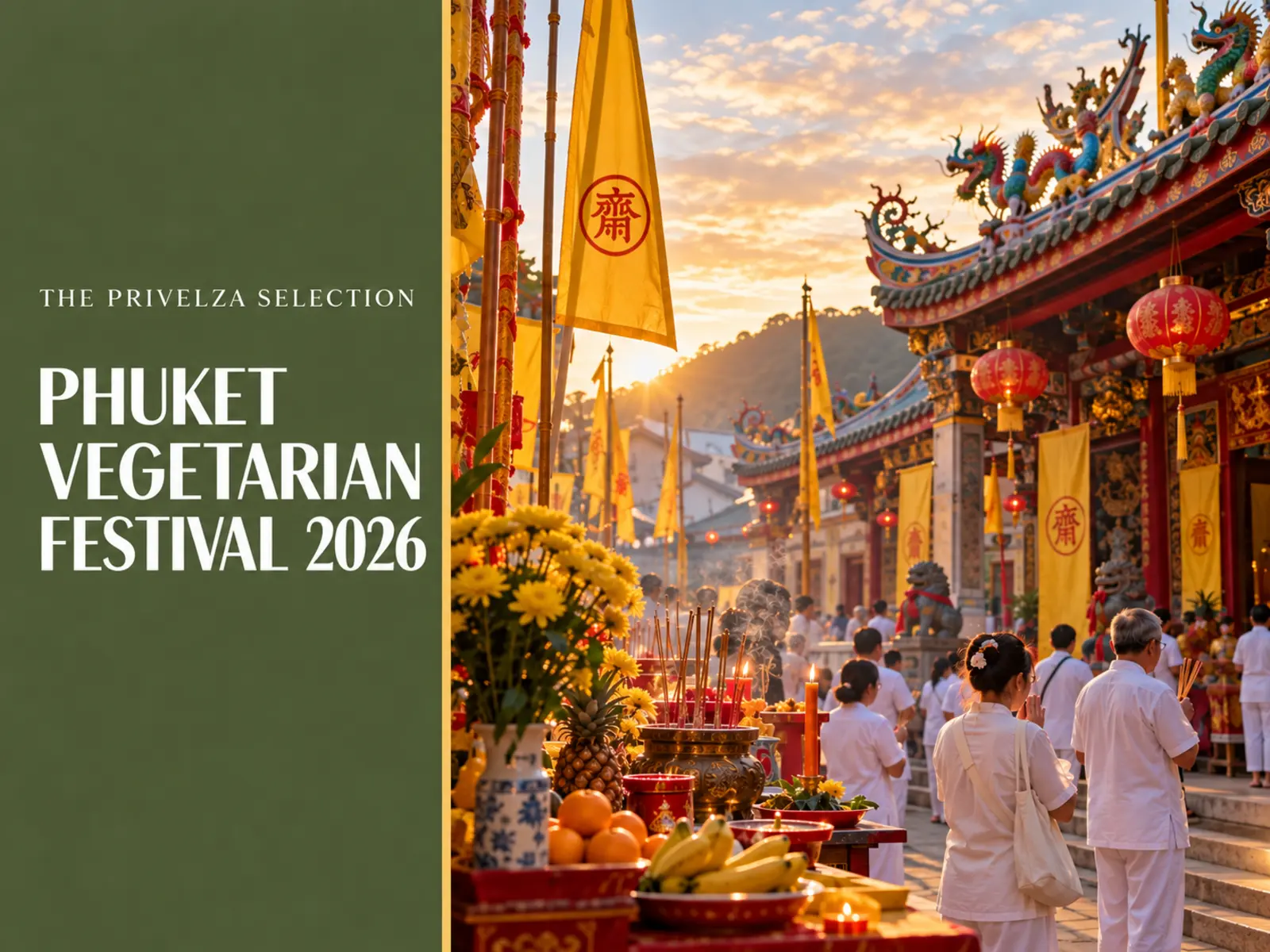
For many first-time visitors, food is the gentlest point of entry. Yellow flags identify food connected with the vegetarian observance, and whole areas of Phuket become easier places to explore meat-free dishes.
Do not assume that the word “vegetarian” describes every ingredient rule that matters to every person. The observant practice described by the Public Relations Department excludes animal-derived ingredients and several pungent plants, including garlic and onions. A stall’s festival label is not an allergen guarantee, and it does not answer questions about shared equipment, soy, gluten, nuts or cooking oil.
A food-led visit works best when curiosity comes before collecting. Choose a small area, try a few dishes and ask simple questions when the vendor has time. Notice how familiar Phuket and southern Thai flavours are adapted. Treat the meal as one expression of the observance rather than a standalone street-food event.
You can enjoy festival food without claiming to follow the full religious discipline. Be clear about the difference between tasting food and undertaking the observance. That honesty is more respectful than adopting ritual language casually.
Best suited to: visitors who want cultural context without entering intense ritual spaces; families who prefer a flexible introduction; and travellers with limited time.
Check before going: current food areas, opening times, ingredient questions that matter to you and whether nearby streets are affected by ceremonies or closures.
Option two: make it a shrine-centred visit
A shrine visit offers more context than a food stop, but it asks more of the visitor. You are entering an active religious space where people may be praying, preparing offerings, cooking for the community or taking part in ceremonies.
A respectful default is simple: dress modestly, lower your voice, observe before moving closer and follow the instructions of shrine volunteers. Do not step into a restricted area because somebody else has done so. Ask before taking close photographs of worshippers, spirit mediums or private ritual activity. Avoid blocking entrances, offering tables or procession movement.
White clothing is strongly associated with observance, but a visitor should not turn it into a costume. The point is clean, modest and unobtrusive clothing, together with behaviour that does not place the camera ahead of the people practising their faith. If a shrine publishes a specific rule, that instruction takes priority over general visitor advice.
This approach is particularly valuable if you want to understand how the festival is sustained by kitchens, volunteers, offerings and repeated daily practice. It is quieter in purpose, even when the physical environment is busy.
Best suited to: culturally curious visitors prepared to spend time observing; people comfortable following local instructions; and readers who value context more than a checklist.
Check before going: the chosen shrine’s current programme, visitor access, photography guidance, dress expectations and whether a ceremony changes normal entry.
Option three: prepare for a procession and intense ritual environment
Processions are the festival’s most visually recognised element. The Public Relations Department describes spirit mediums, known as ma song, moving with shrine processions amid firecrackers and smoke; other ceremonies may include firewalking or bladed-ladder rites.
These practices should not be reduced to shock value. They are understood within the community as acts of faith and protection. A respectful visitor keeps enough distance to avoid disrupting the procession, does not request a pose and does not treat visible self-mortification as a challenge or stunt.
The practical environment can be demanding. Firecrackers create sudden noise and a risk of injury. Thai Department of Disease Control firecracker safety guidance advises keeping away from areas where firecrackers are being lit and not allowing children to handle them. Department of Health guidance on incense smoke notes that smoke can irritate the eyes and respiratory system, with greater concern for children, pregnant people, older people and those with respiratory or cardiovascular conditions.
For a procession, consider hearing protection, covered footwear and a face covering suitable for smoke and dust. Keep children beside you, retain a clear way out of the crowd and move away if firecrackers, smoke, heat or distress become too much. Do not rely on being able to cross a route at will.
Some ritual acts can be upsetting even when you expect them. Choosing not to watch is a valid decision. A food visit or shrine-centred visit is not a lesser way to understand the festival.
Best suited to: adults who understand the intensity, accept the noise and crowd conditions and are prepared to follow active crowd-control instructions.
Check before going: the current route and time, road restrictions, weather, a safe viewing area, health needs and a realistic exit plan.
Choose the experience that fits you
| Experience | What it offers | Intensity | Essential check |
|---|---|---|---|
| Food-led introduction | Flavour, everyday participation and a flexible first encounter | Lower, though streets may still be busy | Ingredients, food area and nearby closures |
| Shrine-centred visit | Religious context, community practice and a slower understanding | Moderate and dependent on the ceremony | Shrine programme, visitor access and photography rules |
| Procession environment | Public ritual, community movement and the festival’s most intense atmosphere | High: noise, smoke, crowds and visible self-mortification | Route, viewing position, health needs and exit plan |
Do not choose by prestige. Choose by what your group can engage with attentively.
For a family, that may mean a short food-led visit and no procession. For a first-time visitor who wants cultural depth, it may mean one shrine rather than several. For an experienced festival-goer, it may mean one procession approached with preparation instead of trying to follow every event.
Build only the plan the evidence supports
The overall dates are confirmed, but individual shrine programmes are separate operational information. They can cover procession routes, firewalking, bridge-crossing rites, pole ceremonies and other events at different locations.
At the research check for this package, the public Phuket festival information portal still displayed its detailed 2025 programme. The portal itself advises checking dates and times with individual shrines. A previous year’s sequence may help explain the structure of the festival, but it is not a 2026 itinerary.
Wait for a current notice from the relevant shrine, organiser or local authority before fixing transport around a particular ceremony. Recheck shortly before the day because routes, closures, weather and crowd arrangements can change.
Keep the rest of the plan loose. Arrange a meeting point for your group, carry water and protect phones and documents from rain. If you are travelling from another part of Phuket, allow for road diversions rather than building consecutive reservations around an unverified finish time.
The Privelza view
The most considered way to experience Phuket’s Vegetarian Festival is not to see the maximum number of rituals. It is to choose one form of participation that suits you, understand what it means and leave room for the community to observe it on its own terms.
Start with the official 2026 event listing, then confirm the current programme directly with the shrine or organiser relevant to your visit.
For more considered discoveries around Thailand, join the Privelza Circle.
Research note: This is a source-based cultural orientation, not a firsthand account of the 2026 festival. Core information was rechecked on 21 September 2026. Shrine schedules, routes, access and crowd arrangements require fresh confirmation.
PRIVELZA CIRCLE
Join the Privelza Circle
A calmer way to discover Thailand. One thoughtful email each week, bringing together Thailand Brief, The Privelza Selection and practical ideas for living well, travelling thoughtfully and making better-informed choices in Thailand.