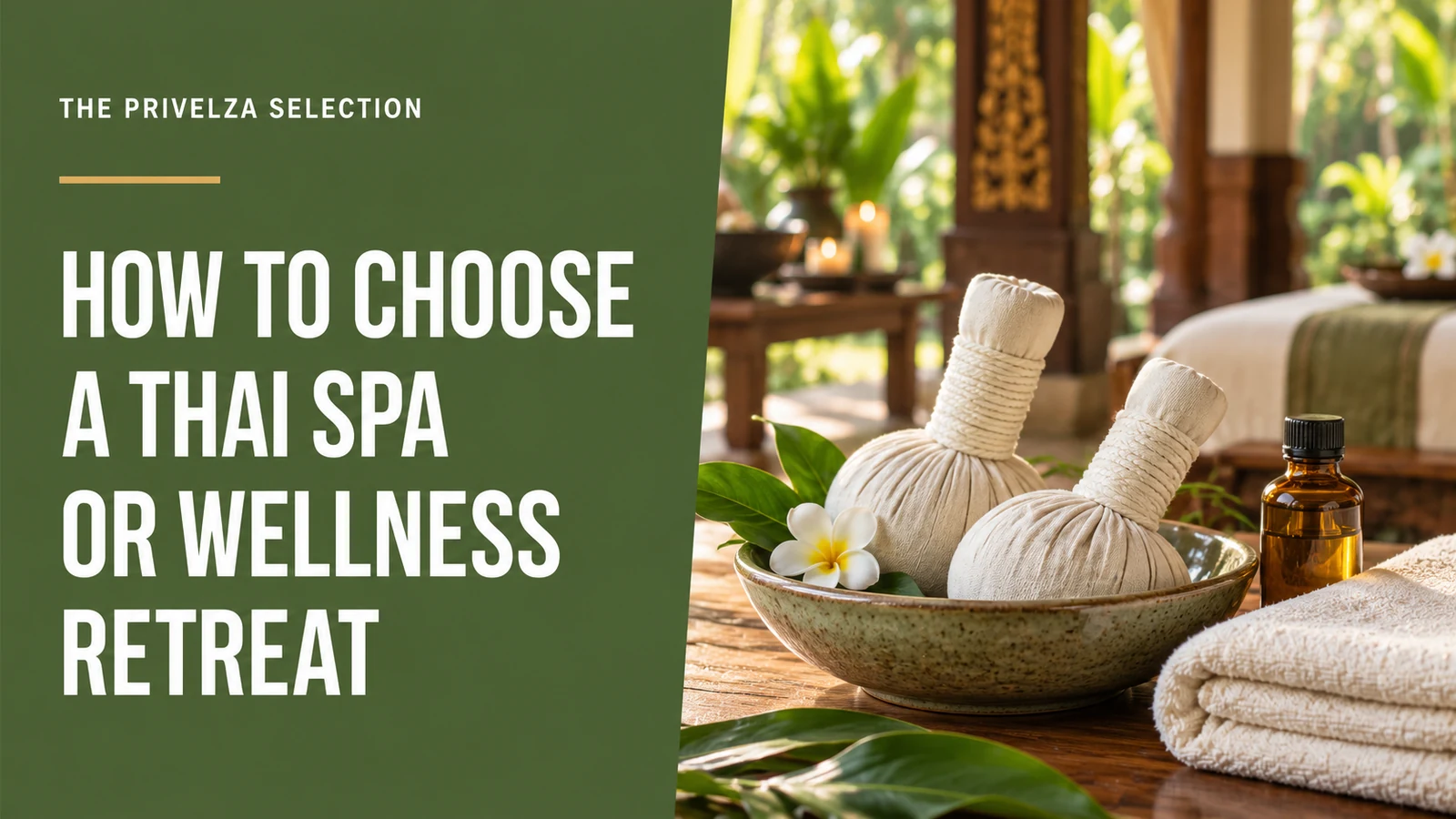
A beautiful treatment menu tells you very little about how a spa is licensed, who will look after you or whether a programme suits your needs. This practical Thailand guide shows you what to verify, what to ask and where wellness ends and medical care begins.
Start with the decision you are making
Choosing a spa in Thailand can look simple: select a treatment, compare photographs and book a convenient time. A multi-day wellness retreat appears more complicated, but the same basic problem sits underneath. The language of relaxation, recovery, detox, balance and longevity can make very different services sound similar.
Begin with the result you actually want from the experience. Are you looking for rest, a traditional massage, help building a healthier routine, a quiet hotel stay with spa time, or assessment and treatment of a health concern? That answer changes which questions matter and which type of provider you should choose.
This guide is not a medical checklist. It is a way to separate four things that are often bundled together in marketing: legal permission to operate, training and registration, an additional quality standard, and your own fit with the experience.
Know which kind of service you are booking
Thailand’s Health Establishment Act distinguishes health-spa businesses from massage for health or beauty. Health spas are defined around water-based therapy and body massage combined with additional services set by regulation. Health massage and beauty massage are separate regulated categories. Medical establishments sit under a different legal framework.
A hotel can contain several of these experiences under one brand. Its spa may be a licensed health establishment; a retreat programme may combine accommodation, movement classes and food; and an adjoining clinic may provide medical services. Do not assume that the hotel name, a white coat or the word “wellness” tells you which entity is responsible for each service.
Ask the venue to state clearly:
- Which legal entity and branch will deliver the service.
- Whether the service is a health spa, health or beauty massage, or a licensed medical service.
- Who is responsible for the programme and which credentials apply to that role.
- If a consultation, injection, prescription, diagnosis or treatment of disease is offered, verify the medical establishment separately rather than relying on the spa’s presentation.
Use three signals, because they answer different questions
1. Establishment licence. Thai law requires health establishments regulated under the Health Establishment Act to be licensed and to operate in the category shown on that licence. The licence must be displayed where it is easy to see. This is the first compliance check, not a rating of ambience or service.
2. Registered people. Service providers regulated under the Act must be registered, and the law links eligibility to a certificate or qualification recognised by the Department of Health Service Support. A spa operator or manager has a different regulatory role from the individual delivering a massage or other service.
3. Additional standards or awards. A tourism or spa-quality mark may assess broader matters such as place, staff, service, equipment and management. That can add useful evidence, but only if the exact branch, scope and validity are current. It still does not tell you whether you will like the pressure, atmosphere, communication style or programme.
The practical rule is simple: licence first, relevant people second, optional quality recognition third, personal fit throughout.
Check the exact establishment, not only the brand
The Department of Health Service Support provides public online tools for checking licensed health establishments, operators and service providers. Search the exact Thai legal name if possible. For a hotel spa or multi-branch brand, confirm the location rather than assuming one registration covers every branch.
If you cannot find a clear match, ask the venue for its Thai registered name and licence number, then search again or contact the department. A missing result is a reason to clarify, not a final legal conclusion: transliteration, abbreviations, branch naming and Thai-only fields can make the public tools difficult for international users.
For a service represented as medical, use the Department’s separate private medical-establishment register. A spa licence and a clinic licence do different jobs.
Ask who will look after you
A polished brand may tell you about a founder, visiting expert or programme philosophy while saying little about the person you will actually meet. Ask who performs the booked service, what qualification or registration is relevant, and whether the venue can accommodate a preference for therapist gender or communication language.
For a retreat, go one level further. Who designs the programme? Who supervises movement, nutrition or medical elements? Which sessions are group activities, and which involve individual assessment? If several providers share responsibility, ask who coordinates the whole stay and what happens if one part is not suitable.
Expect a real consultation, not a ceremonial form
Thai health-establishment law requires managers to ask for and record basic health information and to screen customers so that services are appropriate. Operating standards also address hygiene, first aid, safe equipment and customer screening. A short but thoughtful conversation is therefore a positive sign, not an inconvenience.
Before the service, mention anything that could change what is appropriate: pregnancy, current medication, allergies or sensitive skin, recent surgery or procedures, an injury, a diagnosed condition, or symptoms that are new or worsening. Let the venue explain what it can safely provide. If the answer requires diagnosis or changes to medical treatment, speak to a qualified medical professional.
You should also be able to set boundaries. Agree the service, pressure, areas to avoid and what you want to keep covered. You can ask to stop or adjust at any time. Good service treats consent as ongoing, not as something completed when you signed the form.
Ask these seven questions before paying
- What exactly is included, how long is the hands-on service, and which entity provides it?
- What licence applies to this branch, and can you provide the Thai registered name or licence number?
- Who will deliver each part of the service, and what relevant registration or qualification do they hold?
- What health screening is completed, and who decides whether the service should be adapted or declined?
- Which oils, herbs, products, equipment, heat or water facilities are used, and how are allergies or sensitivities handled?
- What is the total price, including taxes and mandatory add-ons, and what are the cancellation, rescheduling and refund terms?
- If something goes wrong, who is the responsible manager, what incident process is followed and where is the nearest appropriate medical support?
For a multi-day retreat, examine the programme rather than the promise
A retreat is not automatically better because it lasts longer or uses more specialist language. Read the daily schedule and calculate how much is structured, optional and unallocated. Consider whether the level of movement, heat, fasting, silence, group participation or early starts suits you. Ask how dietary needs and allergies are managed, whether airport transfers and taxes are included, and what happens if you choose not to join a session.
Pay particular attention when a programme makes medical-sounding claims. Thai law restricts health establishments from advertising their services or products as able to treat, cure or prevent disease. Claims of guaranteed detoxification, reversal, cure or rapid transformation deserve scrutiny wherever they appear. Ask what the claim means, who is qualified to make it and what evidence supports it.
If the programme includes tests, prescriptions, injections, intravenous therapies or treatment of a condition, verify the licensed medical establishment and practitioner separately. Do not stop prescribed medicine or delay necessary care because of a retreat programme.
Standards do not replace personal fit
Once the basic checks are secure, the best choice becomes personal. A minimalist city spa, a hotel treatment room, a traditional massage establishment and a residential retreat can all be well run while offering completely different experiences.
Compare the details that affect your comfort:
- Communication before arrival: clear answers, written inclusions and realistic claims.
- Privacy and consent: changing arrangements, draping, treatment boundaries and the ability to stop.
- Sensory environment: fragrance, music, lighting, temperature and noise.
- Physical intensity: massage pressure, heat, movement, fasting or long periods of sitting.
- Access and recovery time: stairs, transport, climate, hydration, and time before the next commitment.
- Service recovery: a named person who can address a concern without pressure or defensiveness.
These details do not appear neatly in a licence database, but they often decide whether the experience feels restorative.
Notice calm red flags
Most uncertainty can be resolved by asking direct questions. Step back if the answers remain vague or if the venue:
- Cannot identify the licensed entity or responsible branch for a regulated service.
- Uses a standard or award without showing its issuing body, scope or current validity.
- Promises to cure or prevent disease, guarantees a result, or discourages appropriate medical care.
- Offers no meaningful health screening for a service where your condition could matter.
- Changes the price, duration, practitioner or included services after payment without clear consent.
- Pressures you into a package before explaining suitability, cancellation terms or alternatives.
- Dismisses questions about hygiene, products, privacy, boundaries or incident handling.
A premium setting should make careful questions easier to answer, not harder.
Use a two-minute arrival check
When you arrive, confirm that the branch and service match the booking. Look for the displayed licence and responsible manager’s name, review the service and rate information, complete the screening honestly, and check that the treatment plan has not changed. Notice whether equipment and wet areas appear clean and well maintained and whether staff explain unfamiliar heat, water or other equipment before use.
Then pause. You do not need to proceed simply because you have arrived. A good establishment will adapt, reschedule or decline a service when that is the responsible choice.
Choose with confidence, not certainty
No directory, award or review can remove every uncertainty. What the official checks can do is help you ask better questions and recognise which claims deserve more evidence.
Start with the service category. Verify the exact establishment and, where relevant, the person or medical provider. Read the consultation carefully. Compare the programme with your real preferences, not the experience a brochure says you should want.
The most valuable spa or retreat is not necessarily the most elaborate. It is the one that is properly run, honest about its limits and designed around an experience that genuinely suits you.
PRIVELZA CIRCLE
Join the Privelza Circle
A calmer way to discover Thailand. One thoughtful email each week, bringing together Thailand Brief, The Privelza Selection and practical ideas for living well, travelling thoughtfully and making better-informed choices in Thailand.
Source note and disclosure
Legal and directory information was checked against the official Thai Government Gazette, Department of Health Service Support and Thailand Government public-information pages on 4 September 2026.
Public databases, licence status and programme details can change. Readers should confirm the exact branch and current information before booking. This is independent editorial content; no partner, affiliate, hosted experience, interview or firsthand treatment is represented. It is general consumer guidance, not medical or legal advice.
Official source links
Health Establishment Act — Royal Thai Government Gazette
Health-establishment licence and registration portal — Department of Health Service Support
SPA Directory Thailand — Department of Health Service Support
Private medical-establishment register — Department of Health Service Support
Health-establishment location, safety and service standards — Thailand Government
Wellness-tourism standards cooperation announcement — Thailand Government
International health-spa standards guide — Department of Health Service Support